


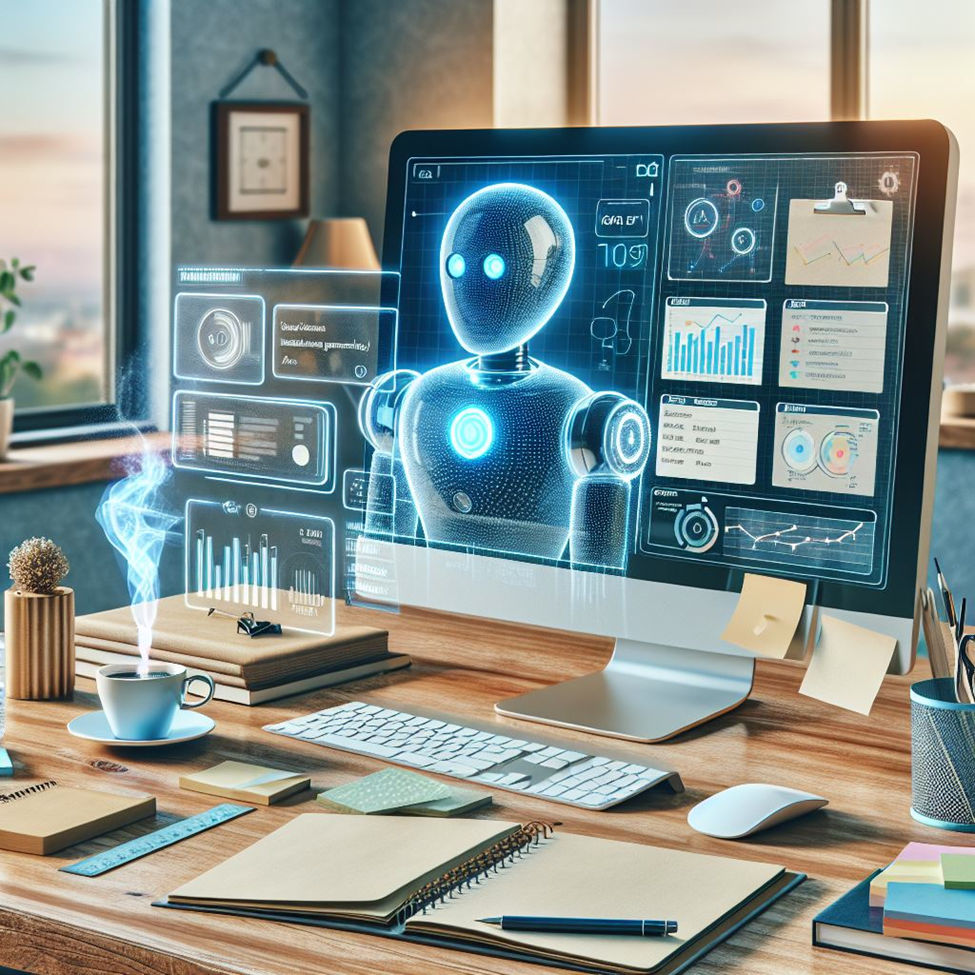
AI is democratized, and with nearly everyone having a mobile phone and internet access, its benefits are within reach for all. Have you started using it for your own benefit?
Nowadays, AI apps are ubiquitous. While I won’t discuss specific tools in this article, selecting the right tools is crucial, especially to ensure data privacy and ethical use, whether for work or personal use. Data privacy and security remain paramount considerations when choosing your AI companion to boost productivity.
Did you know that AI can improve a worker’s performance by as much as 40% compared with workers who don’t use it, according to a study by MIT Sloan? For instance, in the realm of software engineering, AI pair programmers are revolutionizing the field. According to research by Microsoft, GitHub, and MIT Sloan School of Management, developers with access to AI pair programmers completed tasks 55.8% faster than those without. As AI adoption increases, there are different ways to leverage AI for personal and work productivity across various roles and industries.
In this article, I will explore different ways you can use AI to enhance your personal productivity in everyday activities.
We are experiencing AI as part of our everyday lives, often without even noticing. From virtual assistants like Siri and Alexa to recommendation systems on Netflix and Amazon, AI is seamlessly integrated into our routines. Other examples include identifying faces when we take pictures with our phones, scanning documents to convert them into text, and recognizing text from images.
These simple examples illustrate how Artificial Intelligence (AI) simulates human intelligence in machines that are programmed to think and learn like humans. AI includes different techniques and models, including machine learning, natural language processing, and robotics, to perform human-like activities.
This is closely related to our productivity. AI can significantly boost productivity by automating repetitive tasks, allowing us to focus on more important activities. For instance, AI tools can handle scheduling, email management, and data entry, saving valuable time. Additionally, AI can enhance decision-making by providing data-driven insights and recommendations. Personalization is another key benefit, as AI can tailor experiences to individual preferences, making tasks more efficient and enjoyable.
Let’s dive in!
A Day in the Life: Enhancing Productivity with AI
Imagine a typical day in our lives, filled with various activities from morning till night. Each part of the day presents opportunities to leverage AI for increasing productivity and efficiency. Let’s break down a common day into key activities and explore how AI can enhance each of them.
Morning Routine
Waking Up: AI-powered smart alarms can wake you up at the optimal time based on your sleep cycles, ensuring you start your day feeling refreshed. Many apps on our phones already track our sleep patterns and movements, providing recommendations to improve sleep quality.
Planning the Day: AI tools can access your calendar and help you plan your day by analyzing your schedule, participants, and topics. They can suggest the best times for meetings and how to prepare for them.
Work and Professional Tasks
Regardless of your profession—whether you work in an office, in the field, in a factory, or as a public servant—AI offers huge support in daily work routines. 64% of businesses believe that artificial intelligence will help increase their overall productivity, as revealed in a Forbes Advisor survey. AI can assist in:
Task Management: Automating repetitive tasks such as scheduling meetings, managing emails, and data entry, allowing you to focus on more strategic activities.
Focus and Concentration: Maintaining focus by blocking distractions and suggesting optimal work times based on your productivity patterns.
Information Search and Summarization: Retrieving information faster than traditional search methods by using context and semantics. AI can also summarize documents and highlight key messages.
Family and Social Time
Event Planning: Assisting in planning family gatherings by suggesting activities, such as, movies, games, discussion topics, or trips.
Photo Organization: Organizing and tagging family photos, making it easier to share and relive memories.
Personal Development
Reading: Recommending books based on your reading history and preferences, and helping improve your reading speed and comprehension through personalized training programs.
Learning: Providing personalized learning paths and resources tailored to your interests and goals through AI-powered learning platforms.
Leisure and Entertainment
Entertainment Suggestions: Suggesting movies, TV shows, and music based on your preferences, ensuring a fun and engaging experience.
Game Recommendations: Recommending games that match your interests and skill level.
Health and Fitness
Exercising: Creating personalized workout plans based on your fitness goals and progress, and tracking your physical activity to provide insights and motivation.
Sleep Tracking: Monitoring your sleep patterns and providing insights to improve sleep quality.
Relaxation: Suggesting relaxation techniques and activities to help you unwind after a busy day.
Reflection and Planning: Helping you reflect on your day and plan for the next, ensuring you stay on track with your goals.
While we have many concerns regarding the use of technology in our lives, especially with the rise of AI, here are some recommendations to consider when using AI for personal productivity in the next section.
Recommendations when using AI
Privacy Matters
When using AI tools, it’s crucial to protect your personal information. Be cautious about the data these tools collect and how it is used. Always choose AI tools that prioritize data privacy and have clear policies on data handling.
Ethical Considerations
AI algorithms can sometimes exhibit bias, leading to unfair or inaccurate outcomes. It’s important to use AI tools designed to minimize bias and to be aware of the potential for bias in AI decisions. Transparency is also key; understanding how AI tools make decisions and the underlying algorithms can help ensure they are used ethically.
Overuse
While AI can significantly boost productivity, there is a risk of becoming too dependent on these tools. It’s important to maintain a balance between AI and human effort. Over-reliance on AI can lead to skill degradation. Ensure that you continue to engage in critical thinking and decision-making, even when using AI tools. AI is here to support us, not to replace us. Human oversight is essential to ensure that AI tools are used ethically and effectively.
With these recommendations in mind, let’s explore how I personally leverage AI to enhance my productivity. By integrating AI tools into my daily routine.
How I use AI
I use AI in my daily activities. For example, this article review was done with the support of AI. Additionally, the images used in my articles are now generated by AI, allowing me to influence the design to match the topic and maintain authenticity to my style.
One of my favorite uses of AI is for information search. Instead of using traditional search engines, I can directly specify what I’m looking for and the format in which I want the results. For instance, when searching for published reports on technology trends, I can write a prompt like:
“Please list 5 technology trends research reports published in 2024, and organize the results in a table with columns for Report Name, Publisher, Link to the report, Publishing Date, and Key Trends Mentioned. Please sort the results by publishing date and ensure the sources are reliable based on their reputation.” try to use it 😉
Doing this manually could take at least an hour, but with AI, it takes just 2-3 minutes or less.
Recently, I wanted to purchase a new webcam and needed a comparison between different brands, including pros and cons, reviews, and costs. I asked AI to list known webcam brands, sort them, and provide descriptions of each product.
As you can see, I use AI to gather information and organize it in a way that makes it easier for me to digest and use for decision-making or other purposes. However, AI does not make decisions on my behalf.
These are just a few examples of how we can leverage AI in our daily routines to increase productivity. I’m eager to learn how you are using AI today. Please leave a comment with your favorite tool or prompt that you use.
